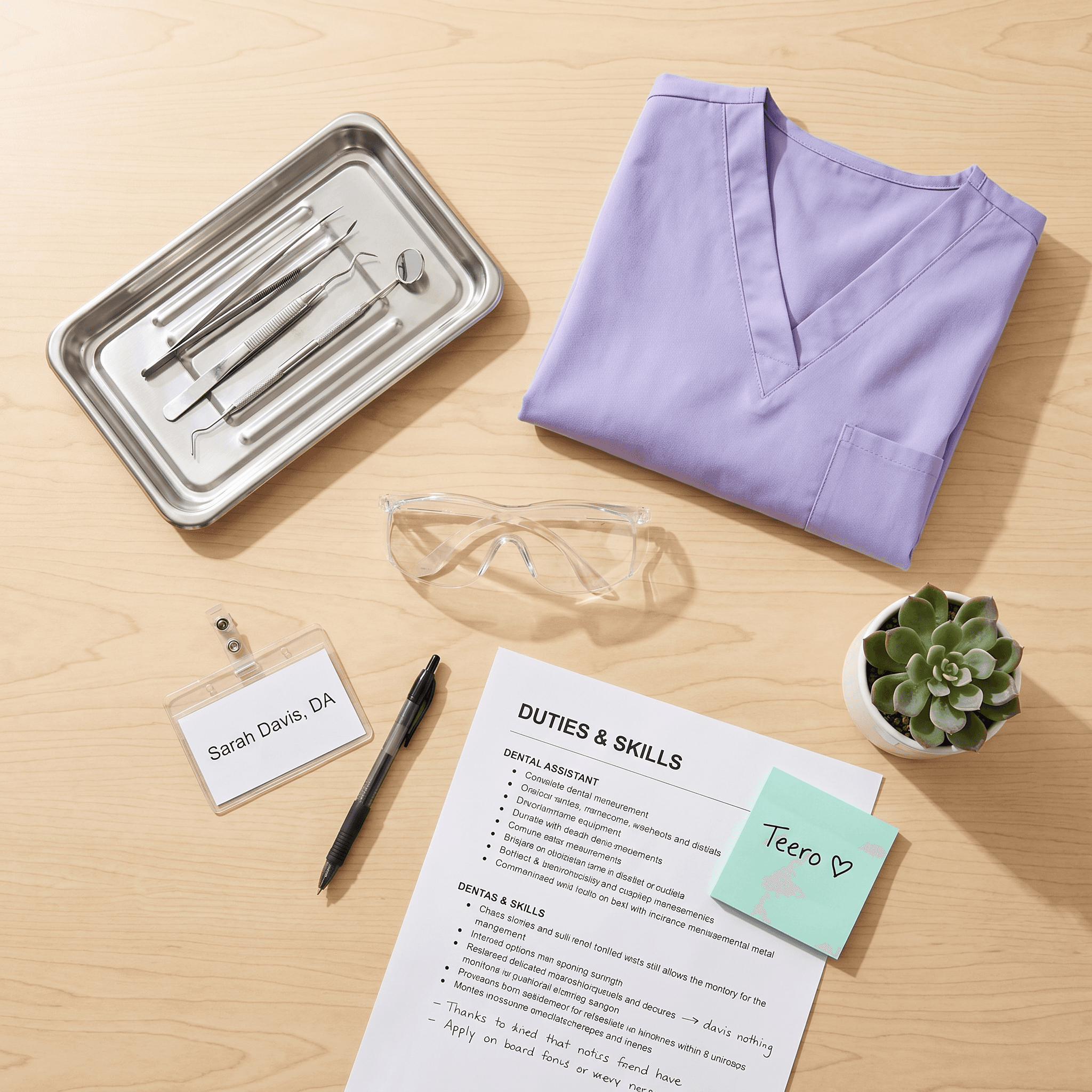

Dental assistant job description: duties, skills, and requirements
Dental assistants keep a practice moving. When the schedule is packed, a single missing assistant can throw off the entire day. Procedures run late, patients wait longer, and front desk teams scramble to keep up. Many offices feel this pressure daily, especially with ongoing staffing shortages and rising patient expectations.
A clear, practical dental assistant job description helps you hire faster, train better, and avoid costly gaps. This guide breaks down what dental assistants actually do, what skills matter in a busy office, and how to set realistic expectations that match the work.
What does a dental assistant do?
Dental assistants support both clinical and administrative tasks. Their work sits at the intersection of patient care and operational flow. A strong assistant keeps procedures efficient while making patients feel comfortable and informed.
On a typical day, a dental assistant may:
Prepare treatment rooms before patients arrive
Sterilize instruments and maintain infection control standards
Assist the dentist during procedures by passing instruments and managing suction
Take dental X-rays
Update patient records and chart procedures
Educate patients on oral hygiene and post-treatment care
Manage inventory and order supplies
Help with scheduling or front desk overflow when needed
In smaller practices, assistants often wear multiple hats. In larger offices or DSOs, roles can be more specialized, but flexibility still matters.
Core duties in detail
Chairside assistance
This is the most visible part of the role. Assistants work directly with dentists during procedures, from routine cleanings to more complex treatments like crowns or extractions.
The difference between a smooth procedure and a chaotic one often comes down to how prepared the assistant is. Knowing the dentist’s preferences, anticipating the next step, and having instruments ready without being asked all reduce procedure time.
When assistants are inexperienced or stretched too thin, appointments run long. That creates a ripple effect across the day and increases patient wait times.
Infection control and sterilization
Dental offices operate under strict infection control standards. Assistants handle instrument cleaning, sterilization, and operatory turnover between patients.
This is not just about compliance. Poor sterilization processes can slow down room turnover and limit how many patients you can see in a day. In high-volume practices, inefficient sterilization often becomes a hidden bottleneck.
Patient preparation and communication
Assistants greet patients, review medical histories, and explain what to expect during procedures. They also reinforce post-treatment instructions.
Patients often remember how they were treated more than the procedure itself. A calm, clear assistant can reduce anxiety and improve case acceptance. Confused or rushed communication leads to more follow-up calls and missed instructions.
Radiography and diagnostics support
Many assistants are trained to take X-rays and prepare diagnostic materials for the dentist. Accuracy matters here. Poor-quality images lead to retakes, which waste time and expose patients to unnecessary radiation.
Administrative support
Assistants often step in when the front desk is overwhelmed. That can include scheduling, confirming appointments, or helping with basic insurance questions.
This crossover is common in understaffed offices. When assistants are pulled too often into admin work, clinical efficiency drops. Practices need to define clear boundaries or risk constant disruption.
Skills that make a strong dental assistant
Technical training matters, but day-to-day success depends on practical skills that show up under pressure.
Organization and time management
Dental schedules are tight. Assistants need to manage room turnover, keep instruments ready, and stay on track across multiple patients.
Disorganization leads to delays, missing tools, and frustrated providers. A well-organized assistant keeps the entire schedule intact.
Communication
Assistants talk to patients, dentists, hygienists, and front desk staff throughout the day. Clear communication prevents errors and reduces confusion.
For example, miscommunication about a procedure or insurance coverage can result in surprise bills. That creates extra work for billing teams and damages patient trust.
Attention to detail
Small mistakes can have real consequences. Incorrect charting, missed sterilization steps, or incomplete patient notes can lead to clinical or billing issues later.
Claim denials often trace back to documentation errors. Assistants play a role in making sure records are accurate from the start.
Adaptability
No two days in a dental office are the same. Patients run late. Emergencies get added. Staff call out sick.
Assistants need to adjust quickly without letting quality drop. This is especially true in practices that deal with frequent staffing gaps.
Technical proficiency
Modern dental practices use digital imaging, practice management software, and electronic health records. Assistants should be comfortable learning and using these systems.
Struggles with software slow down charting and increase the burden on front desk teams.
Education and certification requirements
Requirements vary by state, but most dental assistants need a mix of formal training and on-the-job experience.
Common pathways include:
Completion of an accredited dental assisting program
On-the-job training under a licensed dentist
Certification such as Certified Dental Assistant (CDA) through the Dental Assisting National Board
Many states also require:
Radiology certification for taking X-rays
CPR certification
Continuing education to maintain credentials
Practices should check local regulations carefully. Hiring someone without the required certifications can create compliance risks and limit what tasks they can perform.
Hiring challenges dental practices face
Short staffing and last-minute gaps
Assistants call out sick or leave unexpectedly. When that happens, dentists either run behind or cut the schedule.
Unlike hygienists, assistant coverage is often harder to find on short notice. Many offices rely on a small core team, which creates risk.
High turnover
Dental assisting can be physically demanding and fast-paced. Burnout is common, especially in understaffed practices.
Frequent turnover means constant hiring and training, which drains time and money.
Skill gaps
Not all assistants come with the same level of training. Some may lack experience with certain procedures, software systems, or patient communication.
Without a clear job description and onboarding process, practices end up with inconsistent performance.
Blurred roles
In many offices, assistants get pulled into front desk tasks like insurance verification or payment questions. This happens when admin teams are overwhelmed by payer calls, claim issues, and patient billing confusion.
While flexibility helps in the short term, it often creates bigger problems. Clinical efficiency drops, and both teams feel stretched.
How to write a better dental assistant job description
A vague job post attracts mismatched candidates. A clear one filters for the right people and sets expectations early.
Be specific about daily responsibilities
Instead of listing generic duties, describe what a typical day looks like in your practice.
For example:
Number of patients seen per day
Types of procedures commonly performed
Whether assistants are expected to help with front desk tasks
This helps candidates assess fit before applying.
Clarify required certifications
List state-specific requirements and any preferred certifications. This reduces back-and-forth during hiring.
Set expectations around pace and workload
If your office runs a high-volume schedule, say so. Candidates who thrive in that environment will self-select in.
Outline growth opportunities
Assistants are more likely to stay if they see a path forward. This could include expanded duties, training in new procedures, or support for additional certifications.
Include compensation and benefits
Transparency saves time. Candidates are more likely to apply if they know the pay range upfront.
Training and onboarding tips
Hiring is only half the battle. Poor onboarding leads to early turnover and inconsistent performance.
Standardize your processes
Document how rooms should be set up, how instruments are organized, and how procedures flow. This reduces guesswork for new hires.
Pair new assistants with experienced staff
Shadowing helps new hires learn faster and pick up practice-specific preferences.
Train on systems early
Make sure assistants are comfortable with your software from day one. Delays in charting or X-ray uploads can disrupt the entire workflow.
Set clear performance expectations
Define what success looks like in the first 30, 60, and 90 days. This gives new hires a clear target and helps managers provide focused feedback.
Retaining great dental assistants
Retention often comes down to workload and respect. Assistants who feel overworked or undervalued will leave.
Avoid constant understaffing
Running short every day leads to burnout. Even strong assistants will struggle to keep up long term.
Respect role boundaries
If assistants spend too much time on front desk tasks, both clinical care and admin work suffer. Invest in proper support for each function.
Provide consistent schedules
Unpredictable hours make it harder for assistants to stay long term. Stability matters.
Recognize performance
Simple acknowledgment of good work goes a long way in a fast-paced environment.
Final thoughts
Dental assistants are central to both patient experience and operational efficiency. A strong assistant keeps procedures on track, supports accurate documentation, and helps the entire team stay focused.
Practices that define the role clearly, hire carefully, and support their assistants day to day see fewer disruptions and better patient flow. When staffing gaps do happen, having a flexible backup plan matters. Platforms like Teero help offices find qualified hygienists to keep schedules full and reduce pressure on the rest of the team.